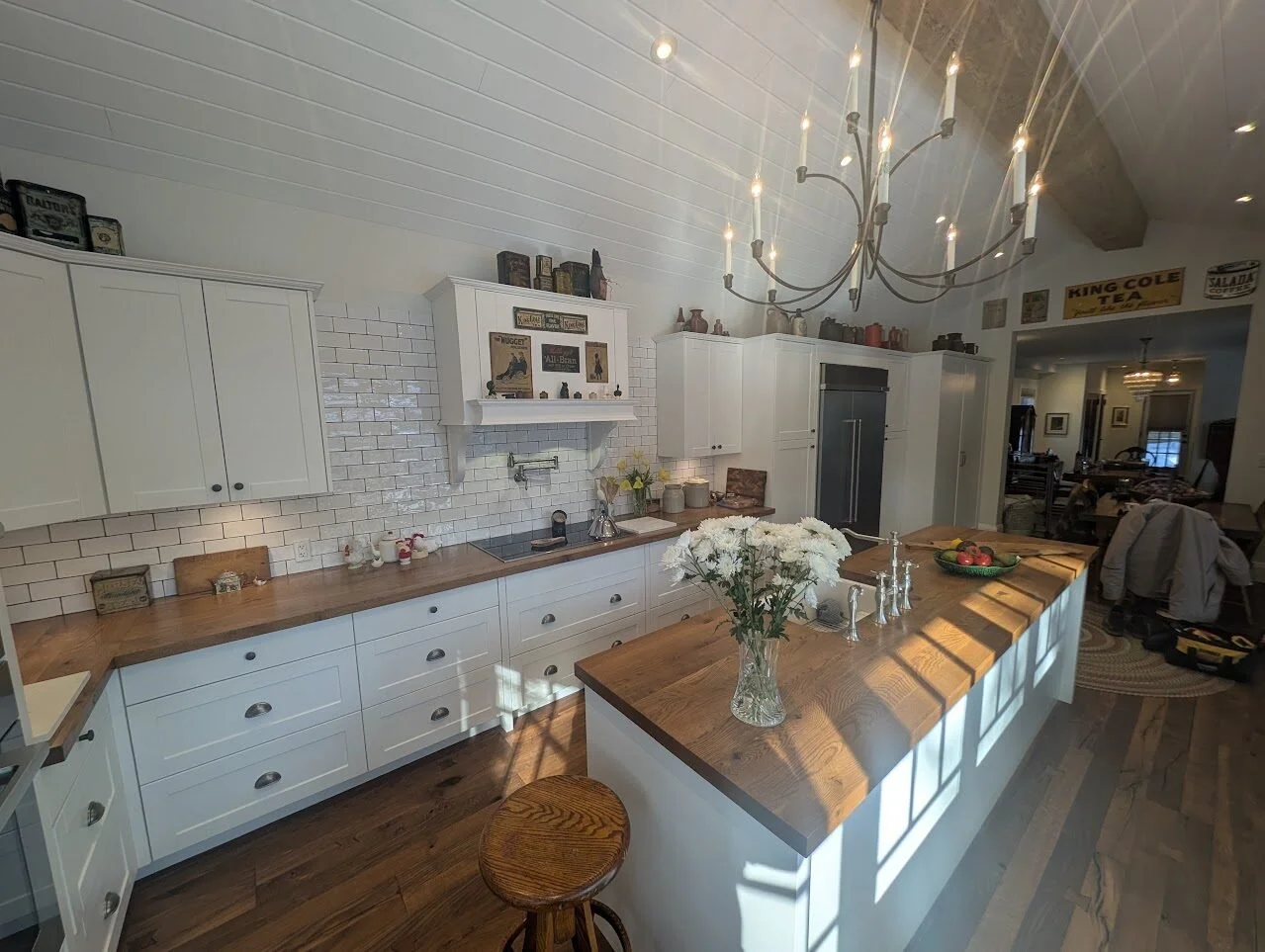
Most homeowners only go through the custom cabinetry process once or twice in a lifetime, so it's normal to have questions about cost, timeline, and what actually happens between that first phone call and the day your new cabinets are installed.
We’re Old World Woodworking, a custom cabinetry and woodworking shop based in Guelph. Our team brings over 50 years of combined experience to every project, and we specialize in precision, hand-built work rather than mass production - every piece we make is custom, with no CNC machines involved.
Below, we'll walk you through what custom cabinetry really means, how the process works from start to finish, what it costs, and how to know if it's the right choice for your home.
Get a Quote on Custom Cabinetry and Milling from Old World Woodworking
or
Custom Cabinetry Explained
Custom cabinetry is built specifically for a space, rather than manufactured in standard sizes and pulled off a shelf. Where prefabricated or semi-custom cabinets come in a limited range of dimensions and finishes, custom cabinetry is designed around the actual measurements of a room - including quirks like sloped ceilings, uneven floors, and walls that aren't quite square, which are especially common in older homes.
Because each piece is made to order, custom cabinetry can be built from almost any material, from standard hardwoods and plywood to specialty options like exotic woods, veneers, or unique finishes. That flexibility means it can be designed to match nearly any aesthetic, whether that's a clean modern kitchen or cabinetry meant to blend into a century-old home's existing character.
Custom cabinetry also tends to involve more collaboration than off-the-shelf options. Homeowners might work directly with a cabinet maker to design a space from scratch, or bring in an interior designer who provides finished drawings and specific aesthetic requirements for the cabinet maker to execute.
How the Process Works
Whoever you end up working with, custom cabinetry projects tend to follow a similar path from first conversation to final installation. Here's what to expect along the way.
1. Initial Consultation and Space Evaluation
The process usually begins with a conversation about your goals, your space, and your budget, followed by an in-person evaluation of the room. This step matters more than people expect - especially in older homes, where sloped ceilings and out-of-square walls require extra scribing and planning that a standard install wouldn't need.
2. Design (With or Without an Interior Designer)
If you're working with an interior designer, they'll usually bring a finished design based on their own drawings, and your cabinet maker's role is to bring that vision to life in wood.
If you don't have a designer, expect your cabinet maker to build the design with you from scratch - and that doesn't mean you need to show up with polished plans. Even a rough sketch on paper is usually enough to get a full design started. A design fee is common at this stage, and it's often credited back into your overall project cost once you move forward.
3. Design Approval and Materials Deposit
Once you approve the final design, most cabinet makers will ask for a deposit before ordering materials. This is standard practice in custom work: it reserves your project in the shop's production schedule and covers the cost of materials before they arrive, so your build isn't delayed once the design is locked in.
Keep in mind that a longer design phase - which can happen if you're still weighing options - will naturally push back when materials get ordered, and in turn when the rest of the project wraps up. Planning your design timeline with this in mind can help keep the whole project on track.
4. Material Selection and Ordering
With the design finalized and the deposit in place, materials get ordered. This generally takes around two months, depending on the specific woods, finishes, and hardware involved. This is also the stage where cost factors like wood species (walnut versus oak, for example) or interior finishes (melamine versus plywood) usually get decided.
5. Building the Cabinetry
Once materials arrive, the cabinetry gets built - either by hand, with machinery, or some combination of both, depending on the shop.
6. Installation
The final step is installation, and precision work counts most here, particularly in older homes with irregular walls and ceilings. Specialized installation skills are what separate a cabinet that looks good in the shop from one that fits perfectly in a century-old kitchen.
7. Timeline
Altogether, most kitchen projects take about three to four months from start to finish, including two to three months of active build time once the design is approved. Painted kitchens tend to run closer to three months, while oiled or pre-finished panel kitchens are closer to two.
Bathroom vanities move faster, typically two weeks to a month, and built-in cabinetry - around fireplaces or bookshelves, for example - generally falls in line with kitchen timelines at about two months. Larger renovations that involve gutting and rebuilding a space, with multiple contractors involved, can stretch to six months or even a year.
How Much Does Custom Cabinetry Cost?
Cost is one of the most common questions we get, and it depends heavily on the project. Here's a general range based on the work we commonly do:
Bathroom vanities: $1,500 to $15,000
Kitchens: $30,000 to $100,000
Built-ins (fireplaces, bookshelves, etc.): $5,000 to $30,000
A few things move the number within those ranges.
Add-ons like pantry pull-outs, specialty garbage systems, soft-close hinges, or specialty lighting can each add anywhere from a few hundred to well over a thousand dollars.
A single pre-manufactured pull-out system, for instance, can run $1,400 on its own - enough to take a $200 cabinet up to $1,500.
Material choice matters too - exotic woods like walnut cost more than standard options like oak, and switching from a melamine interior to a plywood interior raises the price as well.
Finally, installation complexity plays a real role - older homes with irregular walls, ceilings, and floors require more time, more scribing, and more skill, which is reflected in the final cost.
Are Custom Cabinets the Right Choice For Your Home?
Custom cabinets aren't the right fit for every project or every budget, and that's okay. They tend to make the most sense for homeowners who are working toward a specific vision - a "dream kitchen," not just a functional replacement - and who have some flexibility in both budget and timeline. They're also the clear choice for homes with non-standard spaces, where prefabricated cabinets simply won't fit without significant compromise.
If your priority is getting a kitchen in place as quickly and affordably as possible, and your space is fairly standard, prefabricated cabinetry may be a better starting point. The comparison below breaks down how the two options differ:
| Custom Cabinetry | Prefabricated Cabinetry | |
|---|---|---|
| Fit | Matches your exact dimensions | Standard sizes, may need fillers |
| Materials | Hardwood, exotic wood, custom finishes | Limited stock materials |
| Design | Fully customized layout | Fixed configurations |
| Timeline | 2–3 months for kitchens | Often just weeks |
| Cost | $1,500–$100,000+ (higher upfront) | $500–$25,000 (lower upfront) |
| Longevity | Built to last | Varies by manufacturer |
Picking a Reliable Cabinet Maker
Once you've decided custom cabinetry is right for your home, choosing the right shop to build it matters just as much as the design itself.
A. Look for Proven Craftsmanship and Experience
Years in the trade tell you a lot. A shop with a long track record - and a team with deep combined experience - has likely already solved the kinds of problems your project might raise.
B. Ask to See Past Projects
Photos of completed work give you a real sense of quality, style range, and attention to detail. A reliable cabinet maker should be able to show you a variety of finished projects, not just renderings.
C. Expect Clear Communication on Timelines and Costs
Custom projects move through several stages, from design to materials to deposits to installation. A trustworthy shop will walk you through each stage up front, including realistic timelines and what affects your final cost.
D. Make Sure They Can Handle Your Space's Quirks
If you live in an older home, ask directly how the shop handles uneven walls, floors, and ceilings. This is where experience really separates one cabinet maker from another.
Old World Woodworking Can Help You Invest in the Right Cabinetry
Cabinetry like this is a significant investment, so it's worth working with a team that understands what that means. Every piece we build is done by hand, with attention to the details that make older Guelph homes unique. From your first design sketch to final installation, we stay involved at every step to make sure it's done right.
If you're ready to talk through your project, we'd be happy to help you figure out what's possible for your space and your budget.
Get a Quote for Custom Cabinetry
or